Coffee service can shape how customers remember a business. A slow queue, an empty airpot, or a cup that tastes different each time can undermine an otherwise smooth visit. The National Coffee Association’s 2024 National Coffee Data Trends report found that 67% of U.S. adults had coffee in the past day. That demand makes dependable service worth examining, especially in busy cafés, offices, hotels, and restaurants.
A Batch Coffee Brewer prepares several servings in one cycle, helping staff serve a steady flow without brewing every cup separately. During a morning rush, a full thermal server near the counter can reduce repeated trips to the machine. Consistent brewing also makes portion planning easier. The Specialty Coffee Association’s brewing guidance emphasizes control of variables such as water, grind, and contact time; commercial equipment can help teams repeat a chosen recipe. It is not automatic perfection.
This article explores why businesses choose batch brewing, from speed and labor efficiency to consistency and menu planning. It also considers practical trade-offs, including waste when demand is hard to predict, counter space, and the need for regular cleaning. A batch brewer can leave coffee sitting too long if staff do not manage small, fresh batches. That detail matters. The best choice depends on service volume, customer expectations, and how carefully a team maintains its process—not simply on how many cups a machine can produce.
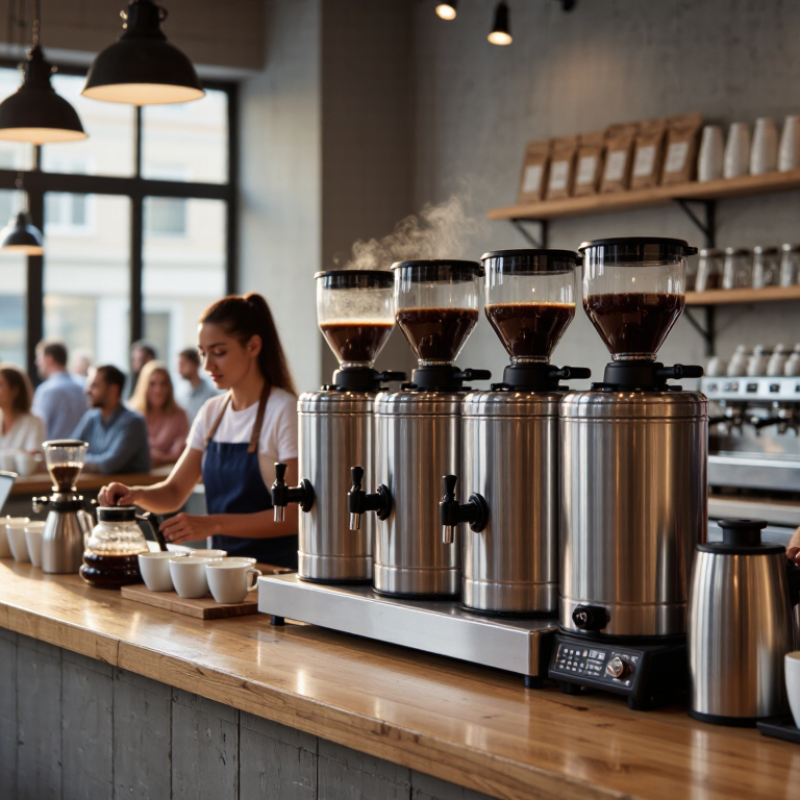
What a Batch Coffee Brewer Is and How It Works
A batch coffee brewer makes several servings of filter coffee in one brewing cycle. It typically has a water reservoir, a heated brewing system, a spray head, and a basket for ground coffee. The brewed coffee drips into a carafe or insulated server. In a busy café, that can mean a fresh pot ready while staff take orders or prepare food.
The operator adds a measured dose of coffee to a paper or reusable filter, then selects a batch size or starts the brew cycle. Heated water flows through the spray head and wets the grounds across the basket. It then passes through the coffee bed and filter, carrying soluble compounds into the server below. The process takes several minutes. Not instant.
Taste depends on more than the machine. Grind size, coffee dose, water temperature, and contact time all affect extraction. A grind that is too fine may slow drainage and produce a harsh cup; one that is too coarse can taste thin. Staff should follow the brewer’s operating guidance, keep the spray head and basket clean, and adjust recipes in small steps. A neglected filter basket can leave old oils behind. It happens.
Batch brewing also involves a trade-off: making a larger volume saves repeated brewing, but coffee quality can decline if it sits too long. An insulated server may help retain heat, though it does not stop flavor changes. Tracking brew times and tasting coffee during service gives a team useful feedback, even when the first adjustment does not fix everything.
How Batch Brewing Fits into Daily Business Operations
At 8:15 a.m., a café may face a queue, phone orders, and guests waiting at the counter. A batch brewer lets staff prepare several cups at once while keeping the espresso station free for made-to-order drinks. The National Coffee Association’s 2024 National Coffee Data Trends report found that 67% of U.S. adults had coffee the previous day; 45% had specialty coffee. That steady habit makes quick, predictable service useful during busy periods.
Consistency still takes attention. The Specialty Coffee Association’s brewing standards recommend about 55 grams of coffee per liter of water, with a tolerance of 10%. Staff can use that ratio as a practical starting point, then adjust for the beans, grinder, and customer preference. Keep a scale near the brewer. Record the dose and brew time. Small checks matter.
Batch brewing is not magic. A pot left warming too long can taste flat, and demand is easy to misjudge on a slow afternoon. Brewing smaller batches more often may reduce stale coffee, though it asks staff to watch the service rhythm. A simple brew log can show which times need a full batch—and which need less.
The Benefits of Batch Brewing for Service and Consistency
A batch coffee brewer can make busy service more predictable. Staff prepare a measured volume before the rush, then serve cups without waiting for each brew cycle. That helps during breakfast, meetings, or a short lunch break. Guests receive coffee at a steadier pace. Each batch can taste similar when the coffee dose, grind, water volume, and brew time remain consistent. Small changes still matter. Freshness does too.
Tips: Weigh the coffee and water, and write down the recipe that works for your brewer. Taste the first cup. Brew smaller batches when demand is low, and avoid leaving finished coffee on heat longer than needed. Keep the brew basket and carafe clean; residue can affect flavor.
A batch brewer is not automatically the right choice for every service. A quiet café may waste coffee if it brews a full pot too early, while a sudden rush can empty one faster than expected. Track how quickly each batch sells, then adjust batch size and timing. Staff may need practice to follow the recipe during busy shifts, and that is not always easy. Check the coffee throughout service rather than assuming every pot tastes the same.
Why Choose a Batch Coffee Brewer? Service Capacity at a Glance
In this illustrative planning scenario, a batch brewer makes 8 cups per 6-minute cycle, while single-cup brewing takes 3 minutes per cup. Over 15 minutes, that means 16 cups from two completed batch cycles versus 5 cups brewed one at a time. Actual output varies by equipment, recipe, and workflow; brewing in batches can help teams prepare servings more consistently during busy periods.
Key Features to Consider When Choosing a Brewer
A batch brewer should match the rhythm of your business, not just its peak-hour rush. Estimate how many cups you serve in a typical hour, then compare that demand with the brewer’s batch size and cycle time. A large brew can save staff time, but coffee left sitting too long may lose freshness. Small details matter.
Temperature stability and even water distribution affect extraction from the first cup to the last. Look for clear controls and settings that staff can learn quickly during a busy shift. If the machine uses a carafe or insulated server, check how easily it pours and how long it keeps coffee at a suitable serving temperature. Those details are easy to overlook.
Cleaning needs deserve equal attention. Removable parts and accessible spray heads can make daily maintenance less awkward, while a scale or maintenance alert may help prevent avoidable downtime. Check the brewer’s water and electrical requirements before installation, too. I would not choose a model from capacity figures alone; those numbers may not reflect your real service pattern. Track a few busy days, then ask whether the proposed batch size fits your counter space, staffing, and storage. Something may still be missed, but that check is useful.
How Capacity, Maintenance, and Costs Affect Brewer Selection
A batch coffee brewer can serve a steady stream of customers without requiring staff to prepare every cup individually. Choose capacity based on observed demand, not the busiest hour you can imagine. Track cups sold during morning and lunch rushes for several days. A brewer that is too small creates queues; one that is too large may leave coffee sitting past its best. That matters.
Plan around the size and pace of each batch. For example, a café serving many takeaway orders may need a larger brew volume than a small office with staggered breaks. Check how long a full batch takes and whether staff can refill it during peak periods. Demand can change, so leave some room to adjust. It is easy to overestimate.
Maintenance affects both reliability and labor costs. Look for accessible parts, clear cleaning instructions, and a design that staff can maintain between rushes. Daily rinsing and regular descaling help limit residue and mineral buildup, especially where water is hard. Include filters, cleaning supplies, water treatment, energy use, and expected repairs when comparing costs. The purchase price is only part of the expense. Ask who will handle routine cleaning, and how long the machine can be out of service without disrupting business. A detailed maintenance plan may feel tedious, but missed cleaning often becomes more expensive later.
Why Choose a Batch Coffee Brewer for Your Business? — How Capacity, Maintenance, and Costs Affect Brewer Selection
| Brewer Category |
Typical Batch Size |
Approx. Brewing Capacity |
Best-Fit Daily Demand |
Typical Equipment Cost (USD) |
Routine Maintenance |
Selection Considerations |
| Compact batch brewer |
About 0.5–1 gallon (1.9–3.8 L) |
Roughly 1–2 gallons per hour |
Up to about 40 cups per day |
$500–$1,500 |
Wash brew baskets and servers daily; clean spray heads and descale as water conditions and manufacturer guidance require. |
A practical fit for small offices or low-traffic service. Smaller batches can help reduce leftover coffee. |
| Mid-capacity batch brewer |
About 1–1.5 gallons (3.8–5.7 L) |
Roughly 3–5 gallons per hour |
About 40–150 cups per day |
$1,000–$3,000 |
Daily cleaning of baskets and serving vessels; regular inspection and descaling based on water hardness and use. |
Balances output and footprint for cafés, break rooms, and food-service counters with steady demand. |
| High-capacity batch brewer |
About 1.5–2 gallons (5.7–7.6 L) per batch, depending on configuration |
Roughly 6–10 gallons per hour for suitable commercial models |
More than about 150 cups per day or concentrated rush periods |
$2,500–$7,000 |
Daily cleaning is essential; allow for scheduled descaling, water-system care, and periodic professional servicing. |
Higher throughput can support busy service, but requires adequate counter space, utilities, and demand to justify the investment. |
| Batch brewer with insulated servers |
Often about 1–1.5 gallons per server |
Depends on brewer; typically comparable to the brewer’s rated output |
Locations needing portable coffee service or multiple serving points |
About $1,500–$5,000, including a typical server setup |
Clean servers and lids after use; inspect seals and dispensing parts; follow cleaning instructions to prevent residue buildup. |
Insulated servers can reduce reliance on hot plates and make it easier to move coffee away from the brewing station. |
Planning guide: Capacity, prices, and batch sizes are indicative ranges for commercial equipment, not guaranteed specifications or supplier quotations. Equipment costs exclude installation, water filtration, grinders, and coffee. Confirm rated output, electrical and plumbing requirements, cleaning procedures, and total installed cost with the equipment supplier. Actual cup counts vary with serving size and operating patterns.
Conclusion
A Batch Coffee Brewer prepares larger quantities of coffee in a single brewing cycle, making it a practical option for businesses that serve many customers throughout the day. By brewing in advance and keeping coffee ready for service, teams can reduce wait times, organize busy periods more smoothly, and avoid repeatedly preparing individual cups. Following consistent brewing steps also helps deliver a dependable taste from one batch to the next.
When choosing a Batch Coffee Brewer, consider how much coffee your business needs at peak times, how quickly the machine can brew, and whether its controls suit your staff’s workflow. Look at cleaning requirements, routine maintenance, durability, and the overall cost of ownership as well as the purchase price. The right brewer should match daily demand without producing more coffee than you can serve, helping balance service speed, quality, and operating expenses.
 JoeisaRobot
