Choosing a Coffee Mixer in 2026 is less about chasing the newest feature and more about matching equipment to the way your business actually works. A small café with a short menu has different needs from a busy restaurant preparing several blended drinks at once. Start with the drinks you serve, your peak-hour volume, and the space available behind the counter. Then compare motor power, container capacity, speed settings, noise, and the time needed for cleaning. These details affect service every day. Not just on paper.
Consistency matters. A mixer should produce a similar texture across repeated batches, while remaining practical for staff to operate during a rush. Ask suppliers about expected duty cycles, replacement parts, warranty coverage, and local service support. Check whether containers and accessories are easy to source. Test the controls yourself if possible; a specification sheet cannot tell you whether a lid is awkward to secure or a dial is hard to read with wet hands. Small things add up. They really do.
There is no single best model for every business. A high-capacity unit may be wasteful for a compact shop, while an undersized one can slow down a crowded service. Consider total ownership costs, including energy use, cleaning supplies, maintenance, and downtime—not only the purchase price. Be cautious with broad performance claims unless the supplier explains how they were measured. The right choice should fit your menu, staff, and realistic daily workload. And one honest caveat: forecasts can change, so leave room for a little growth without buying capacity you may never use.
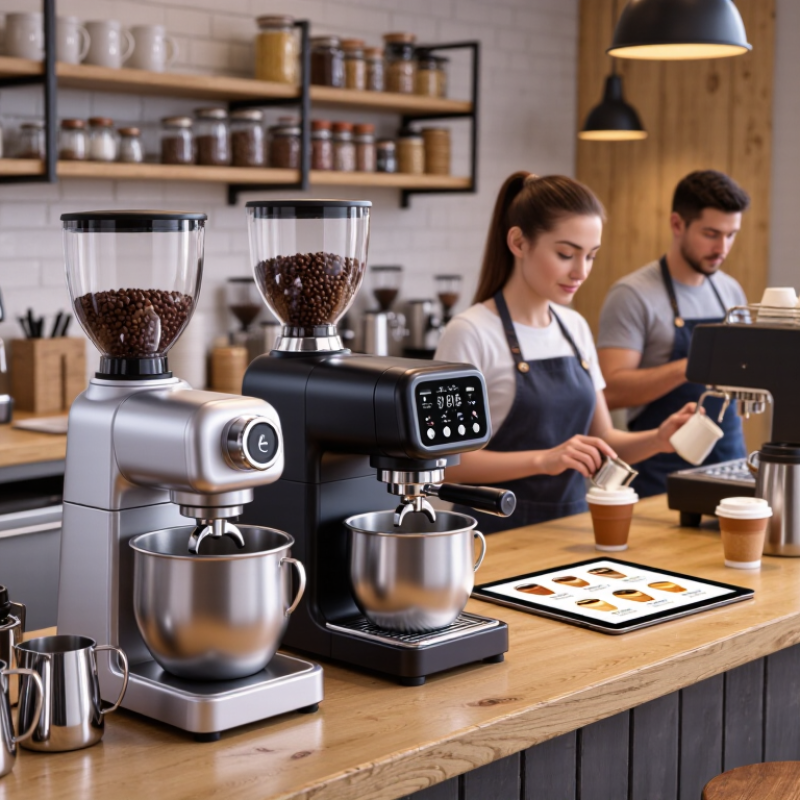
Assess Your Business Needs, Drink Menu, and Service Volume
Start with a seven-day sales log, not a guess about what customers want. Record hot and iced drinks, customizations, and the busiest 15-minute stretch. The National Coffee Association’s 2024 National Coffee Data Trends report found that 67% of U.S. adults had coffee the previous day. Its report also found that 45% had specialty coffee. Those figures describe national habits, not your shop’s exact demand. Use them as context, then check your own receipts.
Match the mixer to your menu and peak workload. A short menu of cold lattes may need different capacity from one offering blended drinks, sauces, and multiple milk options. Count the drinks you expect to make at once, then check batch size, mixing speed, and cleanup time. Test recipes with your actual ingredients; thick syrups or ice can change consistency and slow service. A forecast can still be wrong. Leave room to reconsider after a busy week, and ask staff to note spills, uneven texture, and cleaning delays. Those small details can reveal a poor fit sooner than a product specification sheet.
Compare Coffee Mixer Types and Their Best Uses
A café’s menu should determine its mixer type. A handheld frother suits low-volume orders, quick milk foam, and small counters. It is affordable, but staff must mix each drink individually. A spindle drink mixer handles iced coffee, flavored milk, and thicker drinks more consistently during busy periods. For blended cold coffees with ice, choose a commercial blender; a spindle mixer will not crush ice effectively. Speed matters.
Demand also shapes the choice. The National Coffee Association’s 2024 National Coffee Data Trends report found that 67% of U.S. adults drank coffee in the past day, while 45% had specialty coffee. Those figures suggest varied preferences, not one universal drink format. A broad menu may justify two machines, but limited counter space and cleaning time can make that impractical. That assumption can be wrong. Track actual orders for a few weeks, then match equipment to the drinks customers buy. Check capacity, noise, cleaning access, and whether the motor can handle repeated service. A powerful machine is not automatically the better fit.
Evaluate Capacity, Speed, Controls, and Build Quality
How to Choose a Coffee Mixer for Your Business in 2026?
A good coffee mixer should match your busiest hour, not just your average day. The National Coffee Association’s 2024 National Coffee Data Trends report found that 67% of U.S. adults had coffee the previous day. That broad demand can mean sharp rushes at the counter. Estimate drinks per hour, then choose a bowl capacity that handles your largest realistic batch without leaving excess mix to sit. A larger unit is not automatically better; it can take up valuable counter space.
Check speed alongside capacity. A mixer should blend powdered ingredients and cold drinks evenly, without leaving clumps at the bottom. Ask how long a typical batch takes, and test the sound level if staff work nearby. Controls should be simple enough for a new employee to use during a rush. Multiple speeds or timed settings can improve consistency, though extra buttons are not useful if nobody uses them. Inspect the shaft, housing, and removable parts for sturdy construction and easy cleaning. Small details matter. Thin components may wear sooner than expected.
Tips: Compare the maker’s stated batch size with your actual cup volume. Ask about cleaning instructions, replacement parts, and service support before buying. If possible, run a sample batch with your own ingredients; foam and texture can vary, and a quick showroom test may not tell the whole story.
Check Cleaning Requirements, Safety Standards, and Energy Use
When choosing a coffee mixer, assess cleaning time as carefully as mixing speed. The FDA Food Code 2022 says food-contact surfaces generally need cleaning at least every four hours during use, with exceptions. Treat that as a planning benchmark, then check local requirements and the equipment manual. Look closely at the shaft, lid seals, and joints where milk residue can collect. Can staff remove those parts without tools? A smooth exterior is helpful, but hidden crevices can still slow a busy shift. That detail is easy to miss.
Check that the unit has suitable guarding and documented compliance with applicable equipment and electrical standards. NSF/ANSI 8 covers commercial powered food-preparation equipment; ask whether it applies to the model and request supporting records. Have a qualified installer confirm the electrical supply and placement near sinks. ENERGY STAR reports that restaurants use about five to seven times more energy per square foot than other commercial buildings. That figure describes restaurant buildings, not individual mixers, so it cannot predict a machine’s bill. Ask for measured energy use under a realistic workload, including standby time. Small loads count. Compare energy per batch, not just motor wattage; a high rating alone tells an incomplete story.
Compare Total Costs, Warranty Terms, and Supplier Support
A coffee mixer’s purchase price is only the visible part of its cost. Compare power use, expected service life, cleaning time, replacement parts, and delivery fees. The U.S. Energy Information Administration reported an average commercial electricity price of 12.75 cents per kilowatt-hour in 2023. At that rate, a 1.5-kilowatt mixer running three hours daily for 300 days would use about $172 of electricity annually. Treat this as a rough estimate: actual power draw and local rates vary. Small details matter. Ask suppliers for rated wattage and a service-parts list before comparing quotes.
Read warranty terms line by line. Check coverage length, labor and shipping, exclusions for wear parts, and whether repairs require an authorized technician. A long warranty can still leave you paying for downtime or transport. Ask how quickly the supplier responds, where parts ship from, and whether loaner equipment is available. Get those answers in writing. For a busy counter, even one mixer offline during a morning rush can disrupt orders. Supplier support is harder to score than price, and I would not assume a polished sales reply predicts repair service. Request a sample service procedure and a realistic parts lead time. Compare the full first-year cost, not just the invoice.
How to Choose a Coffee Mixer for Your Business in 2026? - Compare Total Costs, Warranty Terms, and Supplier Support
Planning guide for commercial drink mixers. Cost figures are illustrative USD budget estimates, not supplier quotes. Three-year totals include estimated purchase and routine operating costs; they exclude tax, labor, financing, and downtime. Actual costs, warranty coverage, and service availability vary by model, region, and supplier.
| Mixer type |
Best suited for |
Illustrative purchase budget (USD) |
Estimated 3-year total cost (USD) |
Warranty terms to confirm |
Supplier support to evaluate |
| Commercial handheld mixer |
Low-volume service, occasional blending, or a compact backup unit |
$30–$100 |
$135–$370 |
Request written coverage duration; check whether the motor, attachments, labor, and return shipping are included. |
Check replacement attachment availability, troubleshooting access, and the process for warranty returns. |
| Countertop single-spindle drink mixer |
Small cafés and shops preparing a modest number of blended or mixed drinks |
$150–$400 |
$300–$790 |
Ask whether commercial use is covered and whether the spindle, cup-retainer switch, and electrical components have separate terms. |
Ask for local repair options, parts ordering details, and the expected response time for service requests. |
| Countertop dual-spindle drink mixer |
Busy cafés that need to mix two drinks at once during peak periods |
$300–$800 |
$540–$1,340 |
Confirm coverage for both spindle assemblies and ask whether labor, diagnostic fees, and replacement parts are covered. |
Verify that common wear parts can be ordered individually and ask whether the supplier offers installation or repair guidance. |
| Heavy-duty multi-head mixer |
High-volume locations where multiple drinks may need to be prepared simultaneously |
$700–$1,800 |
$1,090–$2,700 |
Request the full written warranty and clarify commercial-duty limits, parts and labor coverage, exclusions, and claim procedures. |
Prioritize documented service coverage, parts lead times, technician availability, and a clear escalation contact for equipment failures. |
Cost assumptions: Three-year totals are calculated as the purchase-budget range plus three years of estimated electricity and routine maintenance. The estimates assume regular commercial use and are intended for early-stage budgeting; obtain written, location-specific quotes before purchasing.
Buying tip: Compare the written warranty, parts availability, service response commitments, and expected downtime alongside the purchase price. Confirm that the mixer is rated for the drinks, duty cycle, and cleaning routine used by your business.
Conclusion
Choosing a Coffee Mixer for your business in 2026 starts with understanding your menu, daily service volume, and available workspace. A small café serving a focused range of drinks may need different equipment from a busy operation preparing many blended or mixed beverages throughout the day. Compare mixer types by how well they suit your recipes, consistency needs, and expected workload.
Next, assess practical features such as capacity, mixing speed, control options, and durable construction. Consider how easily each unit can be cleaned, whether its safety features suit your workplace, and how much energy it uses. Look beyond the purchase price to estimate total ownership costs, including maintenance and consumables. Finally, compare warranty coverage and the supplier’s ability to provide responsive support, replacement parts, and clear operating guidance. A thoughtful evaluation can help you select equipment that fits your service needs and remains dependable over time.
 JoeisaRobot
