JoeisaRobot
Choosing the right Frozen Yogurt Machine in 2026 requires more than comparing prices and serving speeds. Operators must consider shop size, daily demand, product texture, cleaning routines, and available power. A compact countertop model may suit a café serving occasional desserts. A floor-standing unit can handle busy afternoon traffic with fewer interruptions. Small details matter.
This guide introduces the leading machine types expected to shape the 2026 market. It examines soft-serve machines, batch freezers, self-service systems, and compact commercial models. Each category offers a different balance of capacity, consistency, labor, and customer interaction. Gravity-fed machines can simplify operation, while pump-fed systems may support denser mixes and longer draws. These differences become visible beside a busy service counter.
Reliable selection also depends on evidence from real operation. Cleaning access, hopper size, temperature control, noise, and local technical support deserve careful attention. A machine that looks efficient in a showroom may become difficult during a late-night sanitation cycle. Performance is personal.
The “top” choice is not universal. A small bakery may value quiet operation and a narrow footprint. A high-volume yogurt bar may prioritize dual flavors, rapid recovery, and durable components. Energy efficiency will matter more as operating costs remain unpredictable, although published figures should be checked under comparable conditions. This guide avoids treating one specification as a final answer. That assumption can fail. Instead, it compares practical machine types against realistic business needs, helping readers judge performance with professional caution and firsthand expectations.
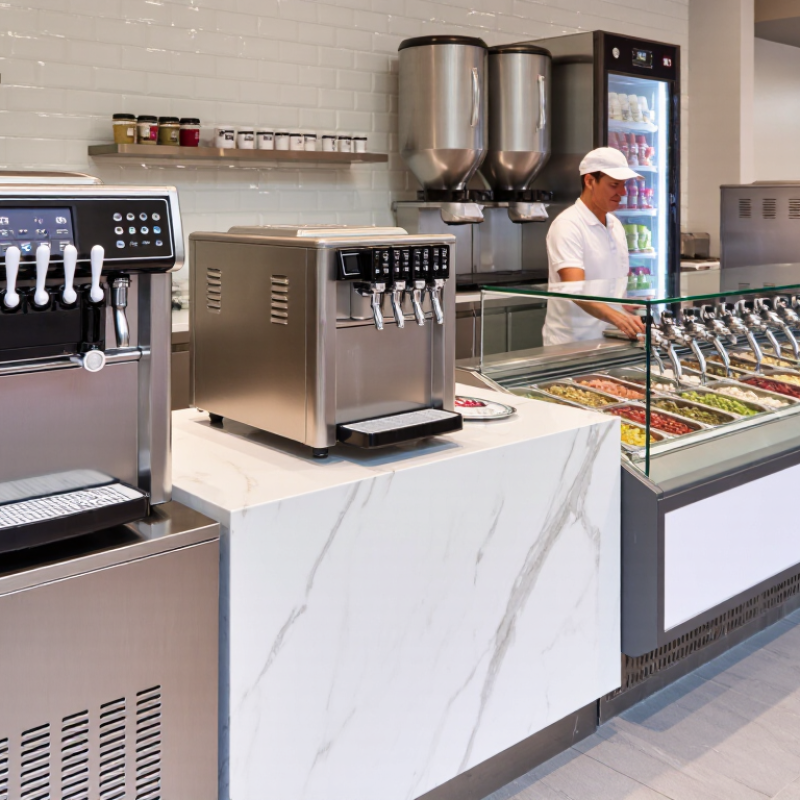
Frozen yogurt machines turn a chilled liquid mix into a smooth, semi-frozen dessert. Inside, a refrigerated cylinder removes heat while a rotating dasher scrapes frozen layers from its wall. This prevents large ice crystals and keeps the texture soft. Air enters during mixing, creating a lighter mouthfeel. Too much air can make the serving collapse quickly.
The main 2026 machine types differ by freezing method, serving format, and output capacity. Gravity-fed machines use the mix’s natural flow and suit cafés with steady, moderate demand. Pressurized machines add controlled air and deliver denser, more consistent portions. Countertop models save space, while floor-standing units support busy locations and larger hoppers. Batch freezers process a fixed quantity, making them useful for specialty flavors and limited menus.
Temperature control defines performance more than appearance. A reliable unit should maintain stable product viscosity during repeated serving cycles. Operators should check cleaning access, hopper insulation, recovery speed, and portion consistency. In my experience, a machine that looks powerful may struggle during a lunchtime rush. That detail is easy to miss. Energy use also depends on ambient heat, cleaning routines, and how often the compressor cycles. Digital controls can improve monitoring, but they cannot replace proper mix ratios or regular sanitation. Some machines produce excellent texture only after careful adjustment, which makes the “best” type less universal than product descriptions suggest.
For small-scale service, countertop frozen yogurt machines offer a practical balance between capacity, space, and control. The leading types include soft-serve units, compact batch freezers, and single-flavor or dual-flavor models. Soft-serve machines suit cafés, dessert counters, and weekend events. They produce smooth yogurt directly into a cup, often within minutes. Batch freezers work better for thicker textures and rotating flavors. However, they usually require more preparation and freezer space.
A countertop model should fit beneath shelving while leaving room for ventilation and cleaning. Operators should check hourly output, hopper capacity, noise level, and electrical requirements before buying. A dual-flavor machine adds variety, but it also increases cleaning time and mix management. For a small menu, one reliable flavor may be more profitable than two inconsistent choices. That lesson is easy to miss.
Food quality depends on more than machine type. Mix viscosity, serving temperature, and draw speed affect texture throughout the day. Staff should record temperatures and clean food-contact parts according to the equipment instructions and local food-safety requirements.
I would also test the machine during a busy service period, not only during a quiet demonstration. My first capacity estimate might look impressive on paper, yet frequent refilling can slow the counter. A clear drainage path, removable components, and simple controls often matter more than extra features.
What Are the 2026 Top Frozen Yogurt Machine Types?
Floor-Standing Machines for High-Volume Frozen Yogurt Production
For busy frozen yogurt shops, floor-standing machines remain the practical choice in 2026. They offer larger hoppers, stronger compressors, and faster recovery during peak service. Continuous soft-serve machines are popular for steady output. They can serve several portions each minute when the mix is properly chilled. Twin-flavor models add variety without requiring two separate cabinets. This saves valuable counter space.
Batch freezers suit operations that need thicker textures or rotating seasonal recipes. Their freezing cycles take longer, but they provide more control over firmness and inclusions. In my experience, hopper capacity matters more than impressive output claims. A machine rated for high production may still struggle during a hot afternoon. Electrical supply, ventilation, and floor clearance also affect real performance.
Tips: Check the recovery time after ten consecutive servings. Measure the doorway before delivery. Ask for cleaning access around the cylinder and beater. Keep backup mix refrigerated at the correct temperature, and record daily temperatures for consistency. Staff should practice disassembly before opening day. It sounds basic. It prevents rushed cleaning. One detail is easy to overlook: quieter equipment may improve the customer experience, but noise levels can vary after installation. Test the machine in the actual service area when possible.
For high-volume operations, floor-standing frozen yogurt machines are commonly selected by rated hourly output and flavor configuration. Twin-flavor and twist machines can serve multiple flavors from one unit, while pressurized systems generally support higher-volume dispensing and more consistent overrun control than basic gravity-fed models. The output figures shown are representative commercial planning ranges based on a 4-ounce serving; actual performance depends on mix formulation, serving size, temperature, cleaning cycles, and operating conditions.
Self-serve and commercial frozen yogurt machines are taking different paths in 2026. Self-serve units usually use gravity-fed or pressurized dispensing systems. Gravity-fed models offer a softer texture and simpler operation. Pressurized systems can produce denser portions with stronger overrun control. A busy shop may prefer dual-hopper machines, allowing two flavors and one twist option. That small choice can reduce queue time.
Location matters greatly.
Commercial configurations are built for steady output, easier cleaning, and tighter temperature control. Floor-standing machines suit shopping centers, buffet counters, and high-volume dessert bars. Countertop models fit cafés with limited space. Batch freezers remain useful for controlled production, especially when operators want customized recipes rather than instant dispensing.
According to Grand View Research, the global frozen yogurt market is projected to grow at roughly 4.5% annually through 2030. This growth supports equipment investment, but market growth does not guarantee good machine selection.
Operators should compare hourly capacity, hopper volume, recovery speed, cleaning access, and electrical requirements. The U.S. Department of Energy notes that commercial refrigeration efficiency depends heavily on operating conditions and maintenance. That lesson applies here. A larger machine may waste energy during quiet hours. I have also seen teams overestimate peak demand and buy capacity they rarely use. The better approach is practical: measure portions per hour, inspect the service area, and test texture during the busiest period. Reports provide direction, not certainty.
What Are the 2026 Top Frozen Yogurt Machine Types?
Key Features for Comparing 2026 Frozen Yogurt Machine Types
In 2026, frozen yogurt machines mainly fall into countertop batch units, soft-serve models, and high-volume continuous machines. Batch machines suit cafés with rotating flavors and modest demand. They freeze each mixture separately, often producing denser yogurt with a hand-crafted texture. Soft-serve machines deliver faster portions and smoother consistency. Their gravity-fed or pump-fed systems affect overrun, serving speed, and cleaning effort. Continuous machines fit busy locations. They need more floor space, stronger ventilation, and careful daily maintenance.
Compare the freezing cylinder capacity, recovery time, and control accuracy before choosing. A small cylinder may struggle during a sunny afternoon rush. An oversized unit can waste energy during quiet hours. Look for adjustable firmness settings, clear temperature displays, and removable food-contact parts. Stainless steel construction helps with durability, but seals and dispensing valves deserve closer inspection. My first comparison focused too much on output. That was a mistake. Cleaning access and service support often matter more after several months.
Tips: Measure your counter and doorway first. Ask for noise levels during operation. Test a real yogurt mix, not only water. Check whether one operator can clean the machine safely. Record serving speed during peak hours. A short trial may reveal problems that brochures hide. Also, calculate electricity and ingredient waste, because the cheapest purchase price rarely shows the full operating cost.
| Machine Type | Operating Method | Typical Product Output | Best Use Case | Key Strengths | Main Limitations | Cleaning and Maintenance | Energy and Space Considerations | Overall Suitability |
|---|---|---|---|---|---|---|---|---|
| Gravity-Fed Soft-Serve Machine | Frozen yogurt mix enters the freezing cylinder from a hopper above it. Product is dispensed by gravity. | Generally suitable for steady small- to medium-volume service; exact capacity varies by cylinder and hopper size. | Cafés, dessert shops, restaurants, and locations offering a limited number of flavors. | Simple product path, relatively easy operation, consistent portion control, and reliable soft texture. | Usually requires more frequent replenishment than larger pressurized systems and may have lower peak throughput. | Requires daily disassembly, washing, sanitizing, lubrication of approved seals, and regular inspection of the dispensing assembly. | Commonly available in countertop and floor-standing formats; countertop models generally need less floor space but have lower capacity. | High for general-purpose service |
| Pressurized Soft-Serve Machine | Mix is delivered to the freezing cylinder using air or a sealed mix-delivery system, helping control overrun and product density. | Well suited to medium- and high-volume service, depending on the number of cylinders and dispensing heads. | Busy frozen yogurt shops, self-serve venues, food courts, and locations requiring extended service periods. | Can provide more consistent texture and portion characteristics during sustained demand; large systems can support multiple flavors. | More complex components, higher purchase and maintenance requirements, and greater sensitivity to incorrect mix or pressure settings. | Cleaning is more involved because the mix-delivery and pressurization components must also be flushed, sanitized, and checked. | Often requires more counter or floor space, ventilation clearance, and electrical capacity than compact gravity-fed units. | Very high for high-volume operations |
| Batch Freezer | A measured batch of liquid mix is frozen in a refrigerated cylinder and then removed or served after the freezing cycle. | Typically produces one batch at a time; batch size and freezing time depend on the machine design and mix formulation. | Artisan dessert shops, restaurants, catering, seasonal businesses, and menus with frequent flavor changes. | Flexible flavor rotation, strong control over recipes, and suitability for dense or premium frozen desserts. | Product is not continuously available in the same way as soft-serve equipment; each batch requires planning and processing time. | Usually simpler than a pressurized system, but the freezing cylinder, dasher, seals, and product-contact tools still require thorough cleaning and sanitizing. | Often requires less dispensing infrastructure, but sufficient clearance is needed for loading, unloading, and cleaning the batch cylinder. | High for customization and flavor variety |
| Countertop Compact Machine | Usually uses a gravity-fed or small pressurized freezing system in a compact cabinet. | Best for low- to medium-volume service; actual output depends on refrigeration power, cylinder size, and recovery time. | Small cafés, kiosks, bakeries, offices, and businesses with limited installation space. | Small footprint, easier placement, lower initial infrastructure demands, and convenient access for short service periods. | Limited hopper and cylinder capacity; product recovery may be slower during long queues or continuous peak demand. | Daily sanitation remains essential despite the smaller size. Small components can require careful handling to prevent residue buildup. | Fits on a reinforced counter or dedicated stand; requires a suitable electrical circuit, ventilation clearance, and safe drainage arrangements where applicable. | High for space-constrained locations |
| Floor-Standing High-Volume Machine | Uses larger freezing cylinders and mix hoppers, commonly with gravity-fed or pressurized delivery. | Designed for sustained medium- to high-volume dispensing, with capacity varying by configuration and product demand. | Dedicated frozen yogurt stores, buffets, large restaurants, entertainment venues, and self-serve operations. | Higher reserve capacity, faster recovery during busy periods, stronger durability for repeated daily use, and possible multi-flavor configurations. | Higher cost, heavier installation requirements, larger footprint, and greater cleaning workload. | Requires structured cleaning schedules, inspection of seals and dispensing valves, condenser maintenance, and compliance with local food-safety procedures. | Needs dedicated floor space, adequate airflow, electrical capacity, and sufficient clearance for service access. | Very high for continuous commercial demand |
| Single-Flavor Machine | Uses one freezing cylinder and one product circuit for a single frozen yogurt flavor. | Output is concentrated on one flavor, which can simplify service and reduce flavor-change downtime. | Businesses with a focused menu, limited space, or a signature frozen yogurt recipe. | Lower operational complexity, simpler cleaning, fewer mix circuits, and generally lower equipment cost than multi-flavor configurations. | Offers less menu variety and cannot provide two separate flavors or a combined swirl without additional equipment. | Fewer product-contact parts make sanitation more straightforward, although the same food-safety standards still apply. | Usually requires less space and power than comparable multi-flavor equipment, subject to the refrigeration system. | High for simple menus |
| Multi-Flavor or Twist Machine | Uses separate product circuits for two flavors and may include a central outlet for a combined twist serving. | Can serve multiple flavors and a blended combination, but simultaneous output depends on cylinder capacity and refrigeration performance. | Self-serve shops, family restaurants, high-traffic dessert counters, and businesses emphasizing menu variety. | Broader flavor selection, visual appeal of twist servings, and increased choice without requiring several separate cabinets. | More product circuits mean more components to clean; cross-contact management and flavor changeover require careful procedures. | Requires separate flushing and sanitizing of each circuit, outlet, seal, and drip area according to the equipment manual and local regulations. | Typically occupies more space and may require more electrical capacity than a single-flavor model. | Very high for variety-focused service |
| Self-Serve Frozen Yogurt Machine | Customers dispense product using front-mounted handles or controls, often with multiple flavors and topping stations nearby. | Capacity and throughput vary widely; performance depends on cylinder size, queue patterns, portion settings, and staff replenishment. | Self-serve dessert bars, buffets, entertainment venues, and locations where customer interaction is part of the experience. | Can reduce staff dispensing work, encourage flavor experimentation, and support flexible portion sizes. | Requires stronger supervision of hygiene, portion control, spills, tampering, and customer traffic around the dispensing area. | Frequent surface sanitation is required in addition to the machine’s routine internal cleaning and scheduled disassembly. | Needs accessible placement, adequate customer clearance, drip management, and enough surrounding space for toppings and queue movement. | High when customer self-service is central |
| Commercial Hard-Frozen Yogurt System | Freezes the mix to a firmer consistency than conventional soft serve, usually for scooping or controlled portioning. | Often operates in batches or with a dedicated hardening and storage workflow; capacity depends on batch and holding equipment. | Specialty dessert counters, restaurants, retail tubs, catering, and concepts requiring firmer take-away portions. | Firm serving texture, strong portion stability, and suitability for packaged or scoop-served products. | Longer preparation and hardening requirements can reduce immediate serving speed compared with soft-serve equipment. | Requires cleaning of the freezing equipment and careful temperature control during storage to maintain food quality. | May require additional freezer or hardening space, increasing the total installation footprint and energy demand. | High for scoopable or take-away products |
Countertop soft-serve machines suit cafés, dessert counters, and weekend events. They dispense smooth yogurt within minutes. Compact batch freezers create thicker textures and rotating flavors. Choose one reliable flavor if your menu is small.
Floor-standing machines suit busy shops with steady customer demand. Larger hoppers support longer service periods. Stronger compressors can recover faster after repeated servings. They need more floor space, ventilation, and electrical capacity.
Measure the shelf height, counter depth, doorway, and ventilation space. Check hopper capacity, hourly output, noise, and electrical requirements. Leave room for cleaning access. A perfect fit on paper may still feel cramped.
Not always. Dual-flavor machines provide variety from one cabinet. They also increase cleaning time and mix management. For a short menu, two inconsistent flavors may hurt service more than one dependable flavor.
Mix viscosity affects firmness and smoothness. Serving temperature changes texture during the day. Draw speed also matters during busy periods. Staff should record temperatures and watch portions closely. Small changes can become visible in the cup.
Test the machine during busy service, not only during a quiet demonstration. Serve ten consecutive portions and measure recovery time. Watch how often staff refill the hopper. My first capacity estimate may be too optimistic.
Look for removable food-contact parts and clear drainage paths. Check access around the cylinder and beater. Staff should practice disassembly before opening day. Rushed cleaning causes avoidable mistakes. Simple controls often help.
Confirm electrical supply, floor clearance, ventilation, and refrigerated storage. Measure the delivery doorway first. Keep backup mix at the correct temperature. Test noise in the actual service area when possible. Installation can change the sound.
Choosing the right Frozen Yogurt Machine in 2026 depends on serving volume, available space, and the level of customer interaction required. These machines use a refrigeration system to freeze and dispense a smooth yogurt mixture while maintaining a consistent texture. Countertop models are compact and practical for cafés, kiosks, and small-scale service, whereas floor-standing machines offer greater capacity and faster production for busy venues.
The main configurations include operator-served units and self-serve systems, each suited to different workflows and customer experiences. When comparing machine types, consider freezing speed, hopper capacity, portion control, cleaning requirements, energy efficiency, noise level, and ease of maintenance. A thoughtful choice should balance daily demand with space, budget, and operational convenience, helping businesses provide consistent frozen yogurt quality while keeping service efficient and adaptable.
